

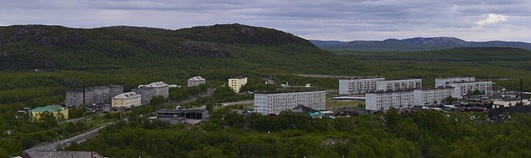
In April 2023, shortly after the Russian major attack on Ukraine, Finland becomes a member of NATO. Europe’s NATO border with Russia/Belarus will be twice as long. Sweden’s NATO accession will be delayed until March of the following year. Putin responds by reorganizing the Leningrad Military District, commanded from St. Petersburg to Murmansk. Today 30 thousand men, largely occupied in Ukraine. But judging by the rapid expansion of bases, it will be increased to 80 thousand.
In recent years, and especially in early 2026, Russia has carried out a significant military buildup along the border with Finland and in northwestern Russia as a direct response to Finland’s and Sweden’s entry into NATO. This buildup is now organized under the re-established Leningrad Military District (LMD) .
Although the expansion is planned, many of the units have been busy fighting in Ukraine. This delays full operational capability on the Finnish border. However, the expansion of the barracks among others gives an idea of how a future war could develop. Like the Russian advance in 1944.
| Region | Status 2022 | Goals 2030 |
| Karelia | Single brigades / Low presence | 44th Army Corps (approx. 15,000 men), Iskander units. |
| Leningrad | 6th Army (reduced) | Reinforced 6th Army , expansion of divisions at Kamenka. |
| Wheels | Strategic naval center of gravity | Increased ground combat capability (Kandalksha), new air defense regiments. |
Hot spots
The expansion is concentrated on the Kola Peninsula and Karelia down towards the Gulf of Finland. Defensively as protection for 1) coastal air and naval bases on the Kola Peninsula. 2) In the south as protection for St. Petersburg. Offensively for 1) coastal invasion in Finnmark against Alta and Tromsö 2) invasion in northern Finland against Rovaniemi, (Luleå), Kiruna, Narvik/Tromsö. 3) Bombing densely populated areas. among others Helsinki – Tallinn – Åland – Stockholm – Norwegian cities.
Since NATO is historically stronger, not least in terms of air power, surprise attacks are likely. Proximity to the sea is important, both for logistics and for landing troops behind NATO’s defense line.
Before the major losses in Ukraine, there were about 6,000 MA ground troops on Kola, mainly to protect the naval bases between Murmansk and the Norwegian border. Most of these were stationed at Pechenga (Petsamo), 10 miles from the Norwegian border, on the road to Kirkenes.
| Area | Primary focus | Status 2026 |
| Pechenga | Nuclear Protection & Heavy Infantry | Upgraded from brigade to division. |
| Alakurtti | Arctic warfare | Expanded with new artillery capacity in Lupche-Savino. |
| Karelia | New front against NATO | Massive reconstruction of old bases (44th Army Corps). |
| St. Petersburg | Management & Air Defense | Hub for LMD; enhanced protection against long-range weapons. |
Pechenga region (Murmansk region)
This is one of Russia’s most militarized areas due to its proximity to the strategic bases of the Russian Northern Fleet and nuclear weapons on the Kola Peninsula.
- 71st Guards Motor Rifle Division : Previously a brigade (200th), but has been expanded to a full-scale division in 2025–2026. < GMaps > < map view > < more info > < video >
- <
- 61st Naval Infantry Brigade : Based in Sputnik (near Pechenga). This unit has traditionally been one of Russia’s most mobile and combat-experienced units in the north. < GMaps > < map view >
- Logistics and infrastructure: Satellite images from early 2026 show new helipads and expanded storage facilities in the area to support a larger permanent troop presence.
Alakurtti and Lupche-Savino (Kandalaksja)
Alakurtti serves as a base for the Russian “Arctic” forces, optimized for warfare in extreme cold.
- 80th Arctic Motor Rifle Brigade : Stationed in Alakurtti. It specializes in operations in roadless terrain with snowmobiles and tracked vehicles. < GMaps > < map view > < photo > < more info >
- Lupche-Savino ( Kandalaksja ): Here Russia has recently (2025–2026) completed a completely new “military city”. < GMaps > < map view > < more info > This houses a newly created artillery brigade and an engineer brigade . The aim is to be able to project firepower directly towards the Finnish border areas around Salla.
Karelia (Petrozavodsk region)
In Karelia, the most dramatic expansion occurs in 2011.
- 44th Army Corps : A new army corps formed in 2024 with headquarters in Petrozavodsk. This corps is planned to consist of up to 15,000 soldiers. < GMaps > < more info >
- Rybka Garrison : A former abandoned Soviet base near Petrozavodsk that underwent extensive renovation in 2025. Forests have been cleared and new barracks built to house repair units and logistics units. < GMaps > < more info >
- Chalna: New housing for military personnel is being built at the Besovets air base outside Petrozavodsk, indicating a long-term stationing of aviation and air defense resources. < GMaps> < photo > < more info >
Runt St. Petersburg (Leningrad Oblast)
Military buildup around Saint Petersburg has become more evident in the 21st century, especially after events such as Russia’s annexation of Crimea in 2014 and Russia’s invasion of Ukraine in 2022. The area is strategically important because of its proximity to Finland, Estonia, and the Baltic Sea, making it central to Russia’s defense in the northwest. New brigades and divisions have been planned or established. Increased mobilization and exercises near the borders.
Around Saint Petersburg, Russia has reinforced:
- Military bases and garrisons in the Leningrad Region
- Air bases , including modernization of fighter aircraft (e.g. Su-35 and Su-34)
- Naval presence via the Baltic Fleet, with bases in Kronstadt and Kaliningrad
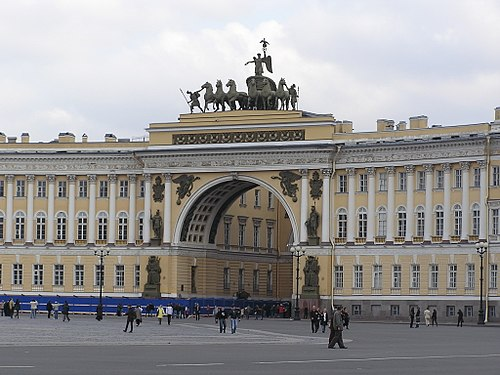
St. Petersburg is surrounded by one of the world’s densest air defense networks (S-400 and S-500 systems), which has been further strengthened in 2025–2026 due to increased Ukrainian drone attacks on oil depots in the region. Leningrad Military District (LMD ): Headquarters are located in the General Staff Building in St. Petersburg. A former motorized infantry brigade in the vicinity has been expanded into a division with the goal of reaching a strength of 10,000 men.
An important focus is advanced air defense systems:
- Deployment of S-400 systems (long-range air defense)
- Radar and surveillance system to cover the Baltic Sea area
- Ability to quickly integrate with other Russian defense zones
2030 like 1944?
Comparing the Soviet offensive of 1944 (the Petsamo-Kirkenes operation) with a conceivable scenario in 2030 highlights a dramatic change in both geography, technology and political context. In 1944 it was about expelling German occupiers; in 2030 it is about a confrontation between Russia and an integrated NATO.
- 1944: The goal was limited but strategic. The Soviet Union wanted to secure the nickel mines in Petsamo (now Petjenga) and drive the German 20th Mountain Army out of Finnmark to secure the Arctic convoy routes to Murmansk.
- 2030: A possible scenario is more of an “A2/AD” (Area Denial) scenario . Russia’s primary goal would be to create a buffer zone to protect its nuclear-armed submarines on the Kola Peninsula. This would involve taking control of Finnmark and northern Finland to deploy air defenses and coastal missiles, rather than a deep invasion of the entire Nordic region.
Terrain and logistics
- 1944: There were hardly any roads. The Soviet offensive was based on extremely tough infantry work in roadless terrain, supported by amphibious landings along the Norwegian coast. Logistics were largely horse and reindeer-based.
- 2030: Infrastructure is more developed, but the terrain is still a nightmare for armored vehicles. A modern Russian invasion would rely on airborne troops (VDV) and special forces to quickly take key points (airports and bridges), while heavy units move along the E75 and E6.
Capacity
| Factor | 1944 (Soviet Union) | 2030 (Russia) |
| Main weapon | Massive artillery and T-34 tanks. | Precision missiles (Iskander, Kalibr) and drone swarms. |
| Notification | Scouts on foot and simple aerial photos. | Real-time satellite monitoring and signal reconnaissance. |
| Time | Slowly eroding through tundra and mountains. | ”Blitzkrieg” with a focus on knocking out the opponent’s command system digitally. |
Timeline
Military development in northwestern Russia (Kola, Karelia and the Leningrad region) has undergone a paradigm shift since 2022. Russian strategy has moved from considering the area as a relatively stable ”low-voltage zone” to actively building a permanent structure to meet an enlarged NATO (Finland and Sweden).
Here is a time series of military developments up to 2030, based on current strategic decisions and observations.
2022–2023: Reassessment and planning
After the invasion of Ukraine and the Nordic countries’ NATO applications, Russia began a comprehensive administrative and strategic reshuffle.
- Decentralization of the Northern Fleet: The Northern Fleet (based on the Kola Peninsula) lost its status as a separate military district. Its ground forces were subordinated to the re-established Leningrad Military District (LMD) .
- Expansion decision: Defense Minister Shoigu announced plans to form a new army corps in Karelia and to reorganize existing motorized rifle brigades into divisions (which would mean tripling the personnel).
2024–2025: Reconstruction and restructuring
During this period, Russia moved from words to action, despite the war in Ukraine tying up large resources.
- Leningrad Military District: The district was officially re-established in February 2024 to focus on the border with Finland and the Baltics.
- 44th Army Corps (Petrozavodsk): This new unit was formed in Karelia. Although parts of the corps were sent to Ukraine in 2024, work began on renovating old Soviet garrisons (e.g. Rybka in Petrozavodsk) for permanent stationing.
- Iskander missiles: Reports confirmed that a new missile brigade equipped with Iskander-M (capable of carrying nuclear weapons) has been deployed in Karelia as a direct response to Finland’s NATO membership.
- Kandalaksha (Kola): Construction of a new ”military town” has begun to house new artillery and engineering brigades near the Finnish border.
2026–2030: Rearmament
Developments during the rest of the decade are guided by Russia’s ambition to restore its conventional capabilities after the end or stabilization of the Ukraine war.
- Completion of divisions: By 2030, Russia plans to have completed the transformation of brigades in the Leningrad and Murmansk regions into full-fledged divisions. This will mean a massive increase in heavy weapons systems (tanks and artillery) in border areas.
- Arctic dominance on Kola: The Kola Peninsula retains its role as a base for strategic nuclear forces. The focus here is on modernizing the submarine fleet and expanding air defense systems (S-400/S-500) to create a “protective bubble” (A2/AD) over the Barents Sea.
- Infrastructure: Investments in railways and logistics hubs in Karelia are expected to be intensified to enable rapid movement of troops between the LMD and the northern bases.

/ By Ingemar Lindmark