

If Sweden boards ships from the shadow fleet. Or as protection for ”Russians” in the Baltics.
A new Russian law amendment expands President Putin’s authority to send troops abroad to protect Russian citizens, including in the event of arrests or legal proceedings. This potentially opens the door to military aggression against countries that interfere with Russian interests, such as the shadow fleet.
Content of the amendment
The bill, approved by a state commission, amends the laws on citizenship and defense, giving Putin the right to use the military extraterritorially against “arrest, detention, criminal prosecution and other forms of persecution” of Russians abroad. This also applies to cases handled by courts without Russia’s participation or international bodies that Moscow does not recognize. The Defense Ministry is behind the proposal, which builds on existing laws but clarifies protections for citizens.
Historical context
Russia has previously used the “protection of Russian citizens” as a pretext for invasions in Georgia and Ukraine, often linked to Russian speakers or passport holders. The new law reinforces this doctrine and could be linked to fears of a European tribunal against Russian leaders for the aggression in Ukraine, supported by 26 EU countries and funded with €10 million in January 2026.
Security implications
The change raises warnings of increased Russian aggression, particularly against NATO countries, with intelligence from Germany, Denmark and France pointing to possible conflicts within 3–5 years. Experts note Russian military preparations near Finland and the Baltics, including new bases and provocations. For Nordic security interests, it reinforces the need for NATO reinforcements in the Arctic and the Baltic Sea.
What does such intervention mean legally?
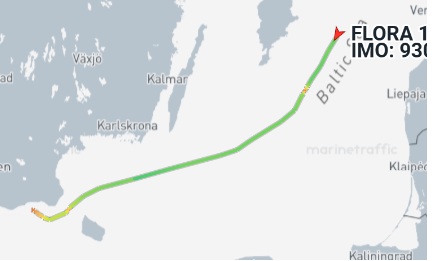
Example: Ships under a flag other than the Russian flag are boarded in international waters or Swedish territorial waters (Borholmsgattet). Even under a different flag if the captain and parts of the crew are Russian. It could also be a case of Russian military intervening to protect “Russian” citizens in the Baltics.
These scenarios operate on the border between international law, the law of the sea and constitutional law. The following is an overview of what such interventions entail legally.
Examples of war risks
1. Boarding of ships in international waters
On the high seas (international waters), flag state jurisdiction applies as a general rule . This means that only the state whose flag the ship flies has the right to exercise authority over the ship.
- UN Convention on the Law of the Sea (UNCLOS): According to Article 110, a warship may only board a foreign vessel in international waters if there is reasonable suspicion of piracy, slave trade, illicit radio transmissions or if the vessel lacks nationality.
- Legal consequence: If Russian military forces board a ship flying another flag without these specific suspicions (or without the flag state’s consent), it constitutes a violation of international law and a violation of the flag state’s sovereignty. It could be seen as an act of aggression or a violation of freedom of navigation.
2. Boarding in Bornholm Strait (Swedish territorial waters)
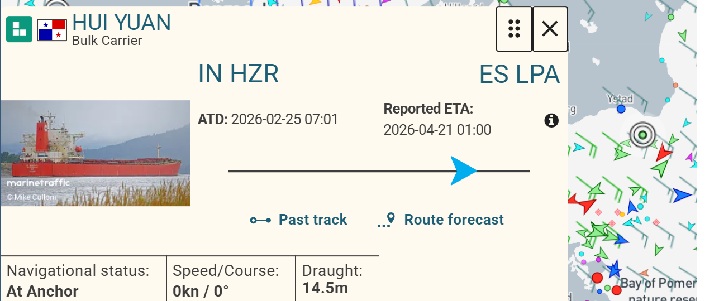
The Bornholm Strait is part of Swedish territorial waters, but it is also an international waterway. Two principles meet here:
- Innocent Passage: Foreign vessels have the right to “innocent passage” through a state’s territorial waters as long as they do not pose a threat to the coastal state’s security or violate its laws.
- Coastal State Rights: It is Sweden , as a coastal state, that has jurisdiction. Russia has no legal right to board third-party vessels in Swedish waters.
- Legal consequence: A Russian boarding in the Bornholm Strait would be a double violation:
- Against the flag state (just like in international waters).
- Against Sweden’s territorial integrity . It would be considered a hostile act and a serious violation of the principle of sovereignty, which gives Sweden the right to take defensive measures.
3. Intervention in the Baltics to protect citizens
This scenario concerns one of the most controversial issues in international law: “Protection of nationals abroad” .
- UN Charter (Article 2:4): Prohibits the use of force against the territorial integrity or political independence of another state.
- Russian Doctrine vs. International Law: Russia has claimed in its national legislation and military doctrine the right to intervene militarily to protect Russian citizens abroad. However, this is not recognized as a valid basis for the use of force in modern international law, unless it is done with the consent of the host country or after a decision by the UN Security Council.
- Self-defense (Article 51): The right to self-defense only applies in the event of an armed attack against the state itself. The fact that a minority with Russian citizenship in, for example, Estonia would experience discrimination does not give a legal right to military invasion.
- Collective defense (NATO): Since the Baltic countries are members of NATO, such an intervention would trigger Article 5 , where an attack on one member is seen as an attack on all.
Summary
| Scenario | Legal status | Primary team room |
|---|---|---|
| International waters | Violation of freedom of navigation | UNCLOS Art. 92 & 110 |
| Swedish water | Violation of sovereignty | UNCLOS & Accession Regulation |
| Intervention in the Baltics | Crime of aggression / Act of war | UN Charter Art. 2:4 |
Links: UNCLOS ,, UN Charter
/ By Ingemar Lindmark