

The US has the military capacity to initiate a blockade, but maintaining it effectively for an extended period of time in the face of Iran’s asymmetric threat would require such a large portion of the US Navy’s total that it would leave other parts of the world exposed, while the risks of escalation and economic disaster are extremely high. The question of whether the US has sufficient long-term naval capacity to implement a blockade of the Strait of Hormuz and the Strait of Oman is complex and concerns not only the number of ships, but also the nature of the operation, geography, and the capabilities of the adversary.
The US likely has the raw naval power required to physically block the strait from targeted shipping, but maintaining an effective, long-term, and comprehensive blockade would be an enormous challenge that would tie up a very large portion of the global US fleet and pose extreme risks.
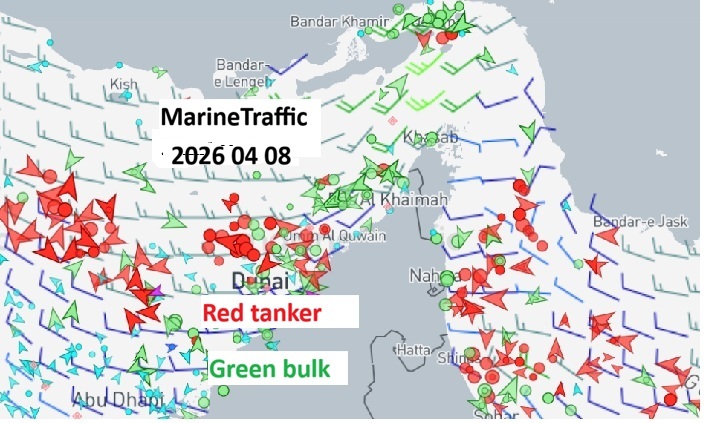
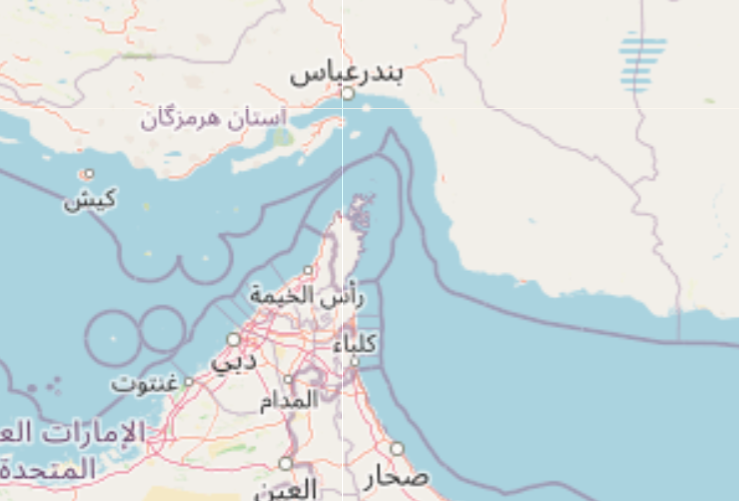
Iran, like Oman and most other countries, has territorial waters that extend 12 nautical miles (about 22 kilometers) out from the coast. The Strait of Hormuz is at its narrowest about 21 nautical miles wide. This means that there are no international waters (High Seas) in the strait. The entire strait consists of territorial waters, either Omani or Iranian. Iranian territorial waters cover the northern part of the strait. However, ships do not have to sail there to get through.
US forces
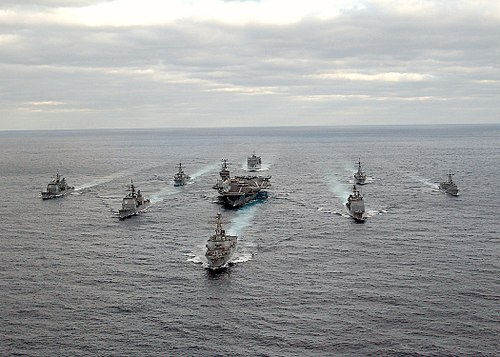
The US Fifth Fleet , based in Bahrain, is permanently stationed in the region and specializes in operations in the Persian Gulf. In a major operation such as a blockade, this force would be greatly augmented. Carrier Strike Groups (CSGs ) would be central. They provide air superiority and firepower, necessary to deter Iranian attacks and protect the ships conducting the blockade itself. More resources:
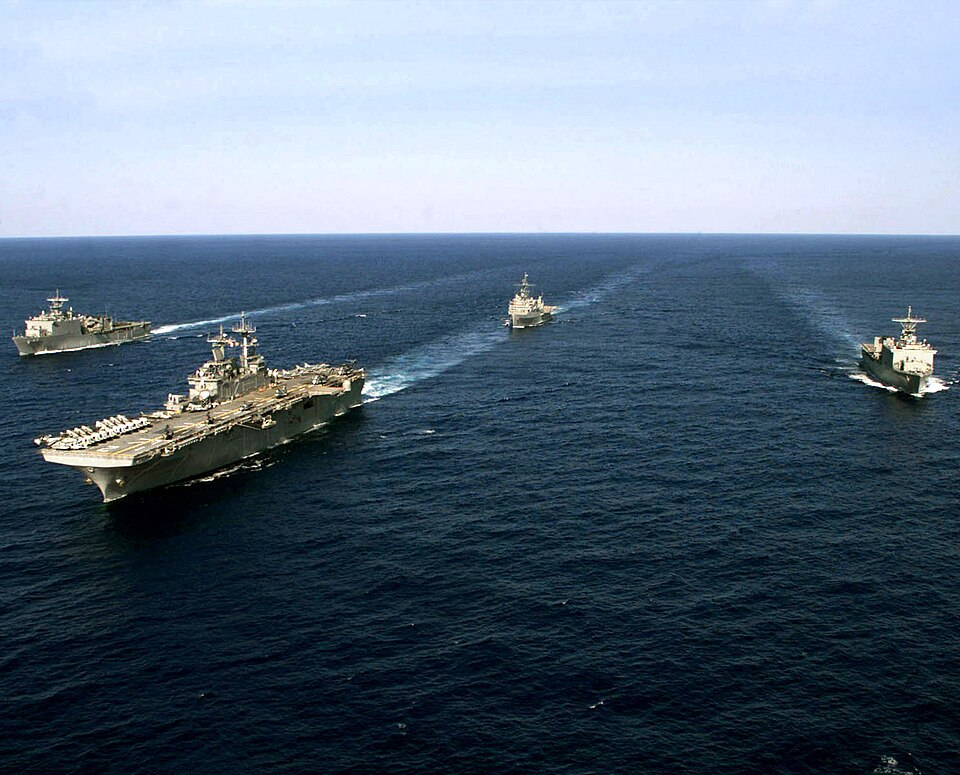
- Amphibious Ready Groups (ARGs ): These include smaller aircraft carrier-like ships and thousands of Marines. They are essential for boarding and taking control of ships, and can also be used to take control of strategic islands or coastal areas. One such force has recently been ordered to the region.
- Destroyers and cruisers: These form the blockade line. They have advanced missile systems to meet threats from the air, sea surface and underwater. They are needed in large numbers to physically patrol and cover the necessary areas.
- Special Forces: Navy SEALs and other special forces are necessary for boarding ships that refuse to stop (interdiction), which is a core part of the blockade.
- The US has minesweeping ships and helicopters in the region. A central part of the current US plan is to clear the strait of mines to enable its own blockade.)
Aircraft carrier
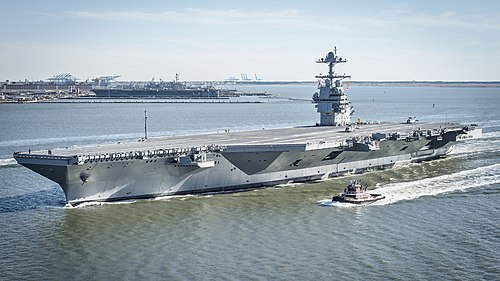
USS Gerald R. Ford . Call Wikipedia
The US has two aircraft carriers near the Persian Gulf as part of its military buildup in the region under Operation Epic Fury
- USS Abraham Lincoln (CVN-72) : Positioned in the Arabian Sea, approximately 150 miles (240 km) off the coast of Oman, near the Persian Gulf, it supports air operations and has been in the region since January 2026.
- USS Gerald R. Ford (CVN-78) : The most advanced aircraft carrier, deployed to the region since February 2026 on an extended tour of duty. It operates alongside Abraham Lincoln in the CENTCOM area.
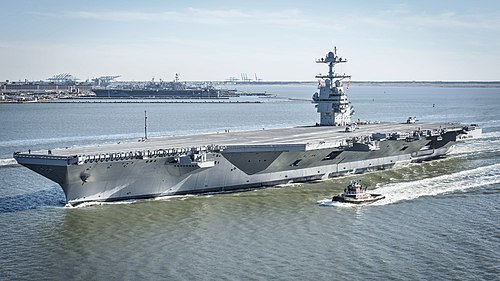
A third ship, the USS George H.W. Bush, is on its way to relieve the Gerald R. Ford after its long deployment.
The aircraft carriers carry F-35C and F/A-18 aircraft for strike operations and have escorts of destroyers. Positions are often in the Arabian Sea rather than deep into the Gulf for security reasons.
The risks
Even if the US has the strength, geography and Iran’s strategy make a blockade extremely difficult. The Strait of Hormuz is very narrow. The shipping lanes are only a few kilometers wide. This means that US ships must operate very close to the Iranian coast, making them vulnerable. Iran is not expected to face the US in a conventional naval battle. Instead, they use:
- Naval mines: Iran has a large stockpile of mines. Clearing the strait while maintaining a blockade is an extremely difficult and dangerous task, as the mines are difficult to detect and can be re-laid.
- Swarm attacks with fast boats: Small, fast, and heavily armed boats can attack in large swarms. They are difficult to defend against too large, clumsy warships in narrow waters.
- Coastal missiles and drones: Iran has advanced land-based missile systems and drones that can reach targets across the strait and Gulf of Oman. They pose a constant threat.
- Submarines: Iran has a fleet of small submarines that are difficult to detect in the shallow and noisy waters of the Gulf.
For the blockade to work, the US must not only stop Iranian ships, but also protect all other ships (non-Iranian) that have the right to transit passage. This requires escort ships for each convoy, which would require an enormous number of ships.
Fairway
The waterway is governed by an internationally recognized Traffic Separation Scheme (TSS ). To avoid collisions in the narrow and busy waters, the UN International Maritime Organization (IMO) has established a mandatory traffic separation scheme. It functions like a motorway of the sea.
The system consists of two separate fairways (sea lanes): one for incoming traffic and one for outgoing traffic. Each fairway is approximately 2 nautical miles (3.7 kilometers) wide. Between the two fairways is a “middle strip”, a separation zone, which is also approximately 2 nautical miles wide. Vessels are prohibited from crossing this zone except in emergencies.
The fairway runs where the strait is deepest to ensure passage for the largest oil tankers (so-called VLCC and ULCC), which require a depth of over 20–25 meters.
- Southern location: The fairway passes through the southern part of the Strait of Hormuz, just north of Oman’s Musandam Peninsula. It is in this area that the water is deepest (over 100 meters in places).
- Territorial waters: The waterway lies largely within Oman’s territorial waters . This means that ships following the international waterway pass through Omani waters, but also Iranian waters. It is a central point in discussions about maritime law in the area.
In the long term?
The US could probably close the strait completely for a short period of time by sinking anything that tries to pass and attacking all coastal batteries. But that is not a blockade, it is a war. Implementing a political blockade (where you stop specific ships but allow others) requires:
- Hundreds of boardings and inspections of commercial vessels every day, which is a huge personnel effort.
- Constant presence to ensure the blockade line does not leak.
- Political endurance as a blockade would choke the world’s oil supply and lead to a global economic crisis, which would put enormous pressure on the US to cancel the operation.
/ By Ingemar Lindmark