

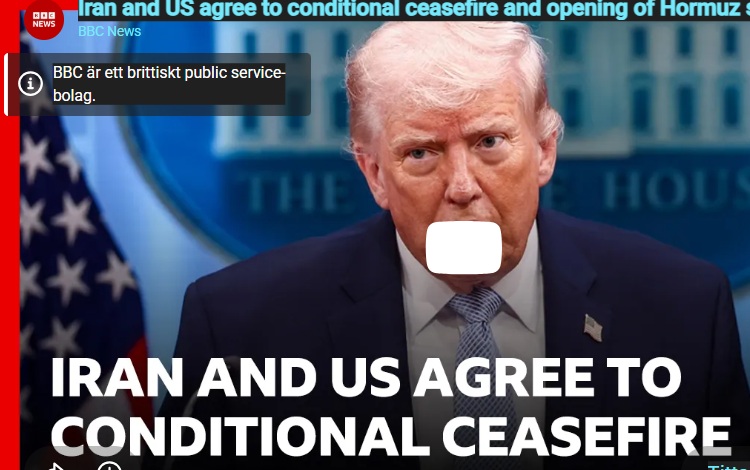
”The Islamic Republic of Iran shall maintain its sovereign oversight, provided that such oversight does not manifest as physical interference or mandatory boarding of vessels in recognized international shipping lanes.”
The wording of the ceasefire agreement is a compromise. Iran is allowed to retain its “sovereign supervision” (to save face domestically), but they promise that it will not manifest itself in the form of “physical intervention”. Iran is forced under the agreement not to declare temporary restricted areas over the strait during the 14 days, which is otherwise a common method of de facto closing off traffic, for example when the Russian navy is exercising in the Barents Sea.
Trump has made it clear in his comments that the US interprets this to mean that any form of drone overflight or radio challenge that delays a ship is seen as a violation of the standstill ( “Zero Interference Policy” ). Iranian fast boats (IRGC) must maintain a minimum distance of 2 nautical miles from US and allied warships. DW media commentary r.
Law of the Sea
The UN Declaration on the Law of the Sea UNCKLOS applies to both the Baltic Sea and the Strait of Hormuz. Which regulates transit traffic ( transit passage ) in international straits, even on the high seas. This means that ships (and aircraft) have the right to uninterrupted and rapid passage. The coastal states (Iran and Oman) may not obstruct, suspend or disrupt this traffic. The problem is that Iran has not ratified the agreement and has indicated that it will charge a fee for passage, to support the country’s reconstruction. Much like the Öresund toll.
The Strait of Hormuz is about 39 km wide at its narrowest point. Since both Iran and Oman claim a territorial sea of 12 nautical miles (22.2$ km), there is no “free water” in the middle. All traffic technically goes through someone’s territorial sea. The same as in the Gulf of Finland, the Bornholm Strait and the Östersjöutloppen. (Although there are special rules there, formulated in 1858 when the Öresund toll was abolished. A channel between Denmark and Sweden is, for example, in Öresund designated as “open sea”.
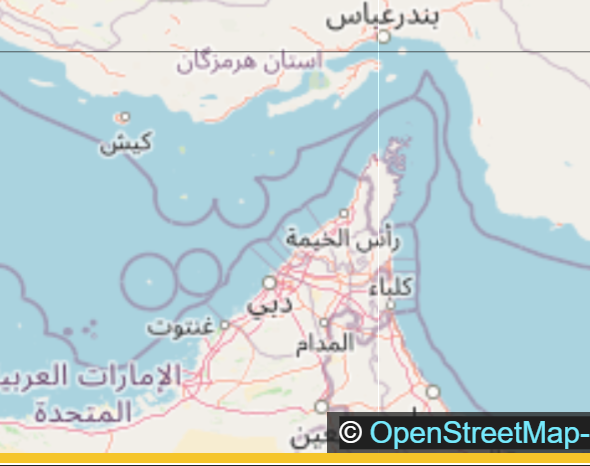
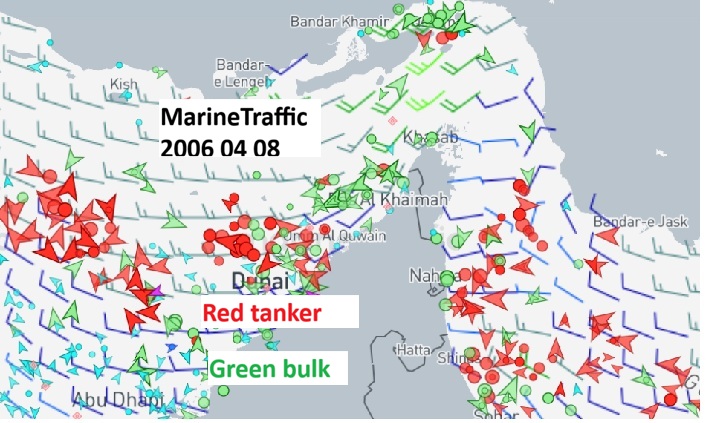
Traffic separation is also applied in the Strait of Hormuz . The shipping lanes are positioned so that they lie in both Omani and Iranian waters. Inbound traffic (towards the Persian Gulf) usually passes through Iranian waters. Outbound traffic (towards the Arabian Sea) usually passes through Omani waters.
Ratification
The problem is that Iran and the US have not ratified the UNCLOS. Iran has signed but not ratified UNCLOS . Iran claims that they are only bound by the older Geneva Convention from 1958. Iran claims that what applies in the Strait of Hormuz is innocent passage rather than transit traffic. Ratification (or ratification) is the formal process by which a state finally binds itself to an international agreement.
If Iran closes the strait citing its national legislation, it is seen as a violation of customary international law by the majority of the world’s countries, which in the longer term could lead to military escalation.
Iran has formulated in national legislation that foreign warships must apply for permission before passing through its territorial waters in the strait – something the US and many other countries completely reject, citing transit traffic. Exception 1: Turkey does not allow warships to pass through the Bosphorus. which prevents Russian warships from entering the Black Sea. 3) Submarines must surface through the Baltic Sea outlets.
Interpretation?
This is a two-week conditional ceasefire . President Trump announced via Truth Social that the United States is suspending planned airstrikes on Iranian infrastructure on the condition that:
- ”COMPLETE, IMMEDIATE, and SAFE OPENING” of the Strait of Hormuz is happening.
- Iran ends its blockade of oil and gas supplies.
- Safe passage is guaranteed for all vessels (freedom of navigation).
Iran, for its part, has articulated its approval through Foreign Minister Araghchi, who emphasizes that safe passage will be through “coordination with Iran’s armed forces . ” This is a critical linguistic nuance as it suggests that Iran still claims control over the strait, rather than recognizing it as completely free international waters.
US vs Iran
This temporary agreement does not resolve the fundamental maritime law disputes, but acts as a “pause button” in an ongoing conflict. The tension in the wording is based on two different interpretations of the United Nations Convention on the Law of the Sea (UNCLOS) .
US line (Transit traffic): The US demands that the Strait of Hormuz be treated according to the rules for transit passage . This means that ships have the right to rapid and unhindered passage without the coastal state (Iran) being allowed to require prior notification or coordination.
Iran’s Line (Innocent Passage): Iran, which has not ratified UNCLOS, claims that the rules of innocent passage apply. This, according to their interpretation, gives them the right to inspect and even stop ships they consider to be a threat to their security. Iran has reserved the right to ”technical restrictions” in the strait, which could be used as a legal loophole to restrict traffic even during the shutdown.
There have been reports that Iran and Oman could be allowed to charge certain transit fees to finance reconstruction, something that strictly speaking contradicts the law of the sea principle of free passage in international straits.
In the Baltic Sea
The law of the sea in the Baltic Sea and the Strait of Hormuz are governed by fundamentally different principles, despite both areas being narrow straits of strategic importance. The difference lies in whether the strait is governed by general law of the sea (UNCLOS), customary law or specific historical treaties .
The Belts and the Sound
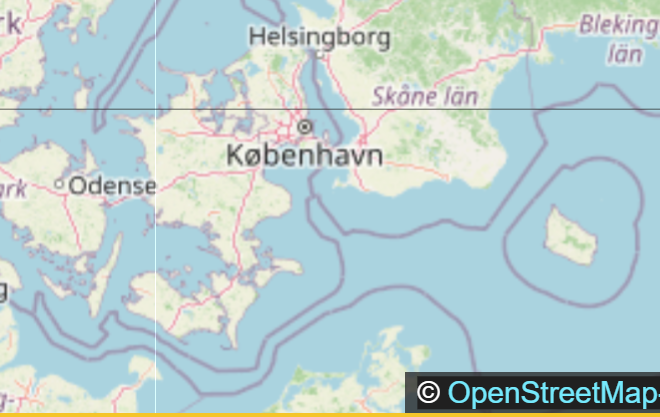
These straits are unique in the world because they are governed by Article 35(c) of UNCLOS , which excludes straits where passage is regulated by “long-standing international conventions”.
- Regime: Treaty of Copenhagen (1857) .
- Passage: Guarantees an absolute right of passage for all ships (including warships) without fees or obstacles.
- Difference to Hormuz: In the Baltic Sea straits, the right of passage is “frozen in time” from the 1850s. There is no legal uncertainty about whether the coastal state is allowed to stop ships – they simply are not allowed to. However, submarines must surface here (according to Danish/Swedish interpretation of old practice), unlike in Hormuz.
Bornholm Gate
The water between Skåne and Bornholm functions more like a ”regular” strait under modern maritime law, but with Nordic stability.
- Regime: Innocent Passage .
- Application: Since the strait is wide enough to accommodate both Swedish and Danish territorial waters, the rules apply that foreign ships are allowed to pass as long as they do not disturb “peace, good order or security”.
- Comparison: Unlike in Hormuz, where ”innocent passage” is used as a threatening legal tool by Iran to board ships, in the Bornholm Strait it is seen as an administrative formality that never hinders commercial traffic.
Finnish fjord
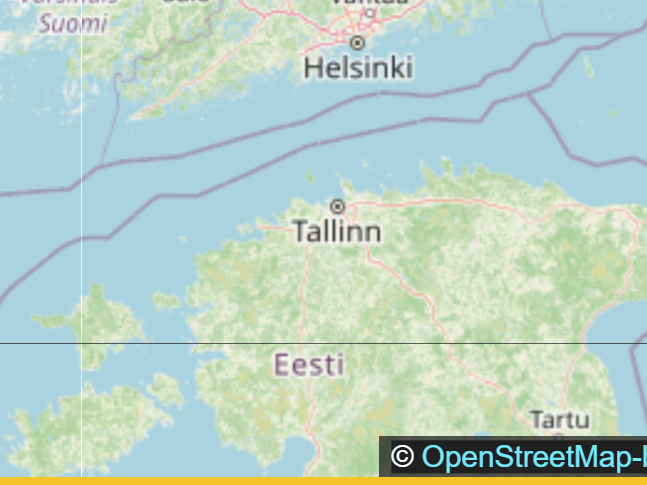
The legal situation here has become more tense due to Russian measures over the past two years.
- Regime: UNCLOS / New Russian Baselines (Decree 914, June 2025) .
- The challenge: Russia has recently redrawn its “baselines” (the lines that determine what is internal waters). By moving them outward, they are attempting to convert parts of the Gulf of Finland into internal waters , where freedom of passage is much more restricted than in the territorial sea.
- Comparison: Russia’s tactics are reminiscent of Iran’s in Hormuz – they use technical details in the law of the sea to try to ”close” or control waters that neighboring countries (Finland and Estonia) see as international waterways.
| Area | Main rule | Can traffic be suspended? | Submarines |
| Strait of Hormuz | Transit traffic (according to USA/UNCLOS) / Innocent passage (according to Iran) | No , according to UNCLOS. Yes , according to Iranian interpretation. | U-position allowed (controversial) |
| Baltic Sea outlets | Copenhagen Treaty (Lex Specialis) | No , absolutely no obstacles. | Must go into surface mode |
| Finnish fjord | Innocent passage (but threatened by new baselines) | Only in case of security threats (Russia is pushing this). | Surface position in territorial sea |
| Bornholm Gate | Innocent passage | In theory yes, in practice never. | Surface position in territorial sea |
Russia
Russia ratified the agreement on March 12, 1997. Before that, the Soviet Union had been a driving force in the negotiations during the 1970s and 1980s.
Russia uses UNCLOS (especially Article 76) as its primary legal basis for claiming large parts of the Arctic seabed, including the North Pole. It claims that the Lomonosov Ridge is a natural extension of its continental shelf. If a conflict arises over the Hormuz agreement, Putin has good reasons based on domestic interests to support Iran.
In 2024 and 2025, Russia has unilaterally begun adjusting its maritime borders and baselines in the eastern Gulf of Finland (at Kaliningrad and off St. Petersburg). This is legally controversial as UNCLOS requires such changes to be technically justified and internationally recognized, which Sweden, Finland and the Baltic states have protested.
| Land | Status UNCLOS | Strategy in narrow straits (e.g. Hormuz or the Baltic Sea) |
| Russia | Ratified | Uses technical interpretations of “baselines” to expand their inner waters (where they have full control). |
| USA | Not ratified | Follows it as “common law”; demands free transit traffic everywhere. |
| Iran | Signed, not ratified | Claims that only innocent passage applies (giving them the right to stop ships). |
/ By Ingemar Lindmark