

The state is risking 200 million kronor? 20 for every Swede.
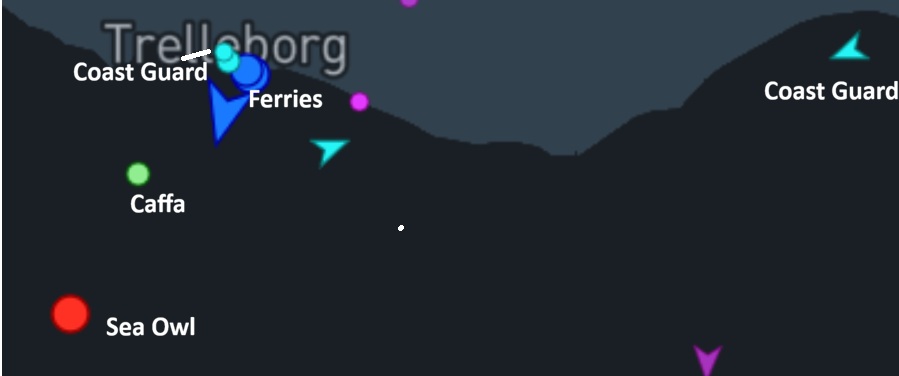
From the German ferry terminal in Trelleborg, two anchored ships can be seen on the horizon. The silhouettes are clear because the boats are empty and high up. The dry cargo ship Caffa was from Brazil, via Casablanca, en route to Saint Petersburg when it was boarded by the Coast Guard on March 6. The ship has been under sanctions from Ukraine since November 25, 2025 for stealing grain and has been known to shut down AIS. Guniea on the west coast of Africa was listed as the flag state.
The Swedish Transport Agency has issued an international ban on use . The ship is considered to be in such poor technical condition that it poses a direct environmental and safety risk. It may not sail further until the technical deficiencies are rectified. The Russian captain is in custody, suspec
ted of several violations of maritime law and using a false document. The case is being tried in court.
Sea Owl
Late in the evening of Thursday, March 12, the National Police Task Force and the Coast Guard attacked the tanker Sea Owl I. From Brazil on its way to the oil port of Primorsk in the Gulf of Finland. The operation was carried out with a police helicopter and boarding boats in Swedish territorial waters. The authorities suspected that the ship was sailing under a false flag. They found false documents registered in the Comoros , an island group off Madagascar.
Sea Owl is on the EU sanctions list and is part of the Russian shadow fleet. According to the Coast Guard, it is in such poor condition that it threatens maritime safety and the environment in the Baltic Sea. The master, a Russian citizen, is in custody for using a false certificate and is being investigated for lack of seaworthiness and violations of maritime law. The ship is not allowed to leave its position south of Trelleborg while the legal review is ongoing. Initially, the costs of guarding and towing will be borne by Swedish taxpayers, with the hope of getting coverage through a future sale.
Horror note
Determining an exact price tag for the vessels Caffa and Sea Owl I is difficult as the cost depends entirely on whether the vessels can be sold as working vessels or whether they must be scrapped as environmentally hazardous waste. Based on the size of the vessels and previous similar cases, a qualified estimate of the potential environmental and scrapping costs for the Swedish state can be made. The cost of scrapping is often calculated per ton (LDT – Light Displacement Tonnage).
- Caffa : A smaller cargo ship (about 96 meters, 4,300 dwt).
- Sea Owl I: A large oil tanker (228 meters long). This is a huge ship, which makes any action extremely costly.
If the owners abandon the ships and the state is forced to take over, the calculation could look like this:
| Post | Estimated cost (estimate) | Comment |
| Environmental remediation | 10 – 50+ million SEK | Draining of heavy oil, chemicals and asbestos removal prior to scrapping. Particularly expensive for Sea Owl I due to its size. |
| Towing & Port | 5 – 15 million SEK | Moving a 228-meter-long tanker to a shipyard requires specialized salvage vessels. |
| Scrapping/Recycling | 50 – 150 million SEK | If the ship does not have a positive steel price value (due to sanctions or need for cleanup), the state may have to pay to get rid of it. |
| Monitoring & Operation | 1 – 2 million SEK/month | Coast Guard presence and ongoing maintenance while the legal process is ongoing. |
Then add the cost of surveillance and legal proceedings.
The crews
Caffa and Sea Owl are mainly manned by Russians. The crew of Caffa appealed for food. Food and fresh water are about to run out. This was stated in a letter from the Russian Consul General Denis Karmalskiy. In an agitated tone, he demanded that the crews outside Trelleborg be given help.
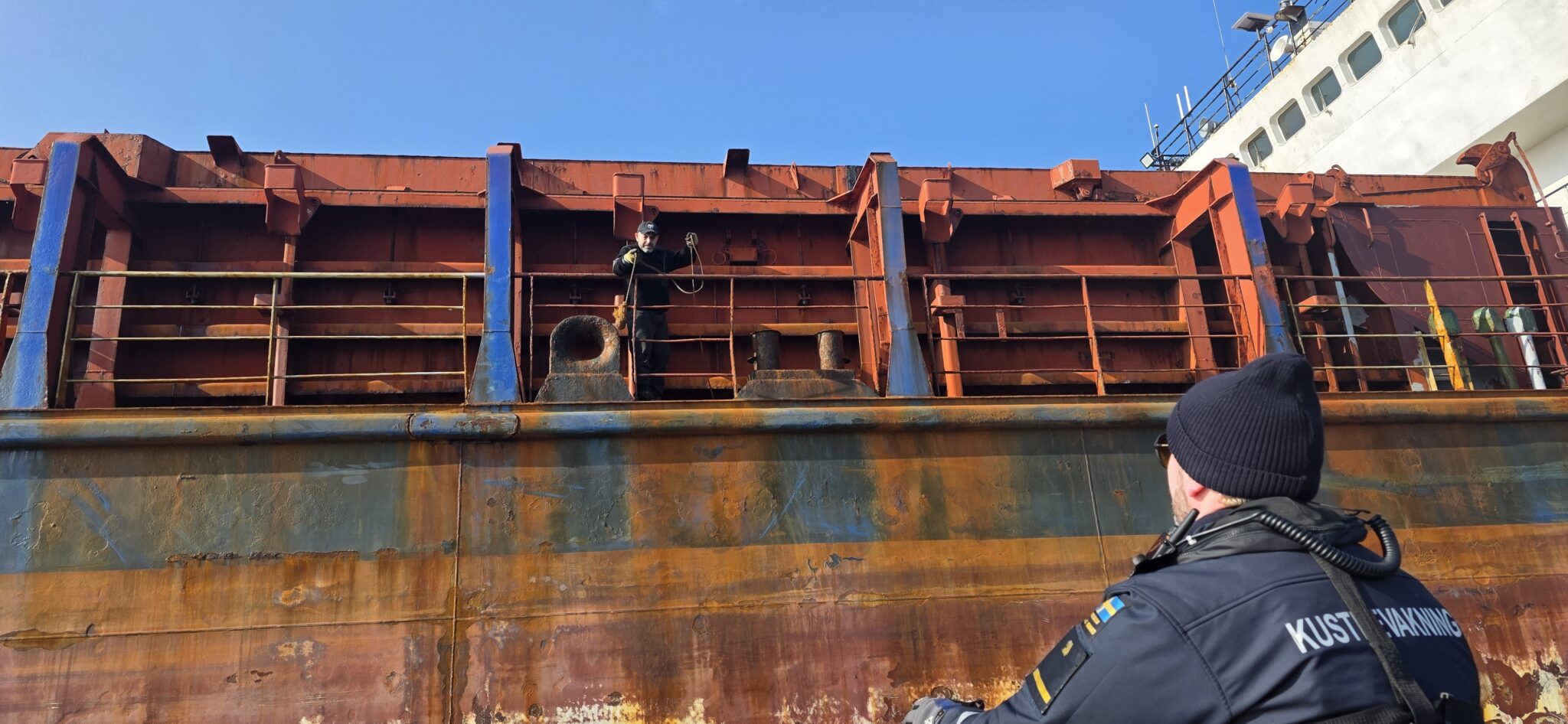
When a ship reaches a legal impasse and the owner stops responding (so-called “abandonment”), the provision of the crew becomes an urgent humanitarian issue. For Caffa and Sea Owl I, the provision is regulated as follows:
As long as the ship has its own resources, it is the commander (captain) who rations the existing food and water. On ships in the shadow fleet, these stocks are often deficient already upon arrival.
The ITF ( International Transport Workers’ Federation ) has inspectors in Swedish ports. If the crew raises the alarm about hunger, the ITF distributes food bags, fresh water and sometimes even prepaid cards so that they can contact their families. The ITF has funds to cover emergency needs, but they later try to reclaim the money from the shipowner or by selling the ship.
The union has inspectors monitoring the situation, especially for the Indonesian crew members on the Sea Owl I. Their role is primarily to ensure that the crew’s rights are met and that they receive assistance with repatriation (travel home) if the ships become permanently grounded.
How long the crew of Caffa and Sea Owl 1 will remain is uncertain. Primarily the flag state and the shipping company are responsible. But falsely flagged ships are in practice stateless. In that case, the responsibility falls on Sweden as a port state. Regulated according to the ILO convention MLC ( Maritime Labour Convention 2006 ).
The Swedish State and the Swedish Transport Agency. According to the Maritime Labour Convention (MLC) , the state where the ship is located has ultimate responsibility for ensuring that the crew does not starve or get sick. In this case, the Swedish State and the Swedish Transport Agency. If no other solutions work, authorities ensure that supplies are arranged to avoid a humanitarian crisis.
Guinea-Bissau and Comoros
In the maritime world, flag states (the countries where a ship is registered) are ranked according to how well they comply with international rules on safety, the environment and working conditions. Both the Comoros and Guinea-Bissau (which is often referred to when talking about Guinea in these contexts) have a very low reputation internationally.
The Paris MoU is the organization that controls ships in European ports. They divide flags into White, Grey and Black lists.
- Comoros: Consistently ranked as “High Risk” on the blacklist . For the period July 2025 to June 2026, they remain at the absolute bottom. Ships flying this flag are almost always stopped and inspected as soon as they reach a European port.
- Guinea-Bissau: Also on the blacklist . They are perceived as a typical “flag of convenience” used by owners who want to avoid strict controls.
In 2025 and 2026, these flag states have become deeply associated with the so-called shadow fleet (vessels carrying Russian oil or goods despite sanctions).
- The Comoros has become notorious for allowing ships with unclear ownership to register quickly.
- Safety risk: Since these states rarely conduct their own inspections, the ships are technically considered rolling (or floating) environmental bombs. Authorities such as the Swedish Transport Agency assume that a ship from these countries has serious deficiencies.
The International Chamber of Shipping (ICS) released its latest report in January 2026. It measures flag states on 19 different criteria (e.g. how often their ships are detained in port and whether they have signed environmental conventions).
- The Comoros receives a low rating with a large number of “negative indicators.” They are considered to lack the ability or willingness to control their own vessels.
- Guinea-Bissau shows a similar pattern and is seen more as a commercial product (selling the right to fly the flag) than as a responsible authority.
The fact that Caffa and Sea Owl I are linked to these flags is a main reason for the authorities’ suspicion:
- False flag: There are suspicions that they are not even properly registered in the Comoros, which would make them completely stateless.
- No help: When problems arise (as now in Trelleborg), these flag states rarely respond to diplomatic appeals. They take no responsibility to help their crew or pay for cleanup.
/ By Ingemar Lindmark