

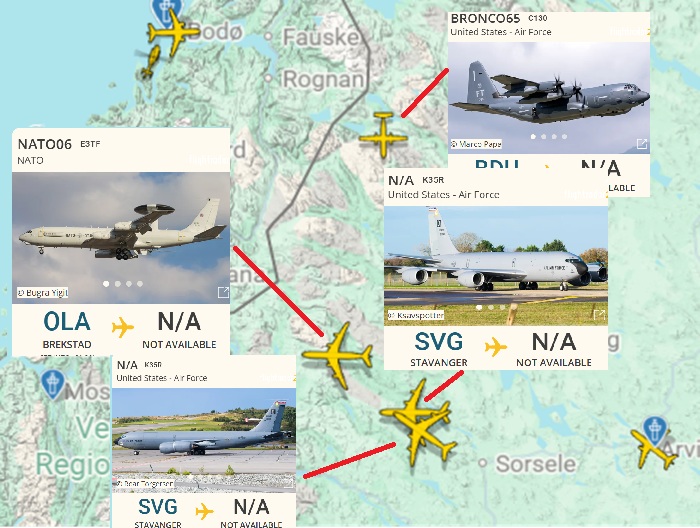
In 2026, microhistory is being written. Trump lays claim to Greenland, especially deposits of rare earth metals near the ruins of Viking farms. NATO will be destroyed if he doesn’t get his way, at the latest if he doesn’t get help clearing the Strait of Hormuz. At the same time, 25,000 men from 14 countries are training on the Arctic Ocean. The name Cold Response 2026 reveals the purpose, to repel an attack from the top-armed Kola Peninsula.
google4bea300b7401f472.htmlThe Supreme Commander of Cold Response is General Alexus G. Grynkewich , who has ultimate responsibility for all NATO military operations in Europe. He approves the overall strategic objectives for the exercise. It is part of the new Arctic Sentry framework , which is controlled from Virginia, USA. The headquarters has formal operational responsibility for the entire Nordic region and AR (as troops from II Marine Expeditionary Force ) is coordinated with European forces.
Guard at the Norwegian sea
Arctic Sentry, which was launched in February 2026, is NATO’s ”umbrella” for all activities in the Arctic and the northernmost parts of the Atlantic and the Baltic Sea. With the aim of gathering all national and multinational activities (such as the Norwegian Cold Response and the Danish Arctic Endurance ) under a common command. In addition to the general security situation, the need to manage tensions around Greenland is mentioned.
From Reykjavik, Swedish Jas Gripen and German Eurofighters fly over the Denmark Strait and Greenland. Military from Western allies land in the capital Nuuk, which causes Trump to threaten their home countries with punitive tariffs. Despite providing evidence of a defense that the island lacks, according to the president.
In December 2025, it was announced that all Nordic countries (Sweden, Finland, Norway, Denmark and Iceland) would now be under Joint Force Command Norfolk in Virginia. This marked the beginning of seeing the Nordic region as a coherent defense zone instead of being divided between US and European commands.
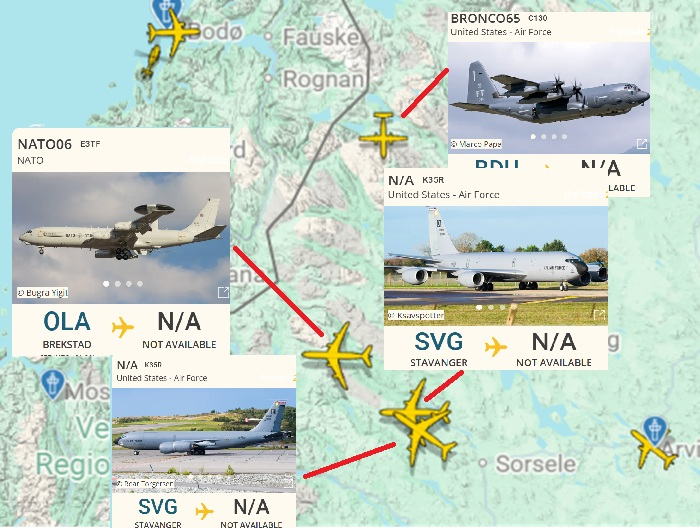
Timeline Nato Arctic Sentry & Cold Response 26
- Dec 2025: Administratively, Sweden, Finland and Denmark are formally moved to JFC Norfolk (Virginia). The entire Nordic region is brought together under one operational command.
- Feb 11, 2026: Launch of ”Arctic Sentry” NATO launches the permanent surveillance and response program for the Arctic and the Arctic Ocean.
- March 2, 2026: Logistics Phase CORE 26 Heavy amphibious forces from the US and UK begin landings and pre-positioning in Norway.
- March 9, 2026: Exercise Cold Response 2026 begins with 32,500 soldiers from 14 countries. Focus: Large-scale defense of the Arctic.
- March 17, 2026 (Today): The climax High-intensity combat operations are underway in northern Sweden, Norway and Finland. Coordination is carried out via the new air operations center in Bodø .
- March 22, 2026: Conclusion The exercise is summed up and Arctic Sentry transitions to permanent readiness phase.
The Baltic sea divide
For the southern Baltic Sea, a similar initiative, sometimes called Baltic Sentry , was launched in 2025. This strategy was pushed forward after the sabotage of undersea cables in the Baltic Sea and Russian drone violations in Poland in the autumn of 2025. Here, cooperation is closer between JFC Brunssum (which is responsible for Poland and the Baltics) and the Nordic countries. The aim is to create an unbroken chain of surveillance from Öresund all the way to Finnish and Estonian waters.
The defense of the southern Baltic Sea is “NATO’s Achilles heel” due to its proximity to Kaliningrad and the Suwalki Corridor. Gotland and Bornholm can indeed function as unsinkable aircraft carriers for NATO. But they are therefore at risk of surprise attacks. The problem is that NATO controls the region with two headquarters, Joint Force Command:
- JFC Norfolk (Virginia, USA): Focuses on the Atlantic Ocean and the strategic sea lanes between North America and Europe. They have recently been given increased responsibility for the Nordic region.
- JFC Brunssum (Netherlands): Has traditionally been responsible for central and northern Europe, including the Baltics and the eastern flank.
NATO stronger than Russia on paper, but…
The southern Baltic Sea is in the middle of the junction between Norfolk and Brunssum. If a conflict breaks out, extremely close coordination is required to avoid “dropping the ball” when Russian ships move from the North Atlantic into the Baltic Sea. Two JFCs risk making different strategic priorities, separate from the Swedish/Finnish perspective seeing the Baltic Sea as a coherent maritime space
- Norfolk sees the Baltic Sea as an extension of the Atlantic and focuses on reinforcements from the United States.
- Brunssum sees it as a land front where the navy’s primary task is to protect the army’s flanks in the Baltics and Poland.
The risk of surprise attacks in the Baltics and the Baltic Seas. In a crisis situation, every minute counts. When command is dispersed, several layers of bureaucracy arise: 1). Decision-making: Orders must pass through headquarters in different time zones (Virginia vs. Europe). 2) Logistics: The coordination of moving resources from the North Sea (under one command) to the Baltic Sea (under another) can create friction. 3) Technical interoperability: Despite NATO standards, different headquarters may use different systems for situational awareness, which can lead to a “fog” where no one sees the whole picture at the same time.
Hence these trends within NATO: 1) NATO has introduced detailed defense plans that will link the different commands more seamlessly. 2) There is an effort to give Norfolk greater overall responsibility for the “Northern Circle”, which would reduce fragmentation. 3) As a new member, Sweden functions as a bridge that naturally links operational responsibility for both the North Sea and the Baltic Sea.
Timeline: Defence of the southern Baltic sea 2025–2026
January – June 2025: Swedish debut and infrastructure focus
- January: Sweden begins its first major NATO contribution by sending a mechanized battalion (P 7) to Latvia as part of NATO’s Forward Presence ( FLF ).
- January: Operation Baltic Sentry is launched in response to sabotage against undersea cables. Sweden contributes ships and surveillance aircraft to secure critical infrastructure.
- June: Exercise BALTOPS 25 is conducted with record participation (over 50 ships). Focus is on mine clearance and amphibious operations along the Polish and Baltic coasts.
September – December 2025: Administrative unit
- September: Eastern Sentry is activated – a reinforced air defense program covering Poland and the Baltics to deal with Russian violations.
- December: Sweden, Denmark and Finland are formally transferred to JFC Norfolk . This means that the southern Baltic Sea is now protected through close cooperation between Norfolk (sea/Nordic) and JFC Brunssum (land/Germany/Poland).
January – March 2026: The new structure is tested
- January: Exercise Steadfast Dart 26 begins. This is the first major test for the new Allied Reaction Force (ARF) led by JFC Brunssum, with a focus on Germany and the southern Baltic sea.
- February: NATO launches Arctic Sentry (11 Feb). At the same time, cooperation on marine sensors and drones in the Baltic Sea is deepened to eliminate the last “blind spots” in surveillance.
- March (Right now): Steadfast Dart 26 concludes (March 18) in Germany and the southern Baltic sea, while Cold Response 2026 is underway in the north. This demonstrates NATO’s ability to fight in two directions at once.
Southern Sweden has gone from being a ”neutral buffer” to becoming NATO’s logistical springboard :
- Skåne and Blekinge: Now function as bases to quickly reinforce the Baltics via air and sea.
- Öresund: Has become a strategic ”bottleneck” controlled jointly by Denmark and Sweden under the Norfolk Command, in close liaison with the German Navy.
Similar to the Hanseatic League, or the Vikings?
Arctic Sentry stretches from Greenland in the west to the Finnish border in the east – exactly the area that the Vikings dominated. If we look at the military logic, the new cooperation resembles in many ways the power structure of the Viking Age. The sea as a connecting link . Just like the Vikings, the new Nordic countries see the Baltic Sea and the North Atlantic not as obstacles, but as highways. The defense of Gotland, Bornholm and Åland is based on being able to move quickly over water, just like the Vikings’ longships did.
The Vikings operated in small groups that were extremely coordinated and fast. NATO’s new Nordic focus is about being able to act locally and quickly (e.g. Swedish submarines and Norwegian F-35s) without waiting for a giant machine in the US to roll out.
The Hanseatic League (or Hanseatic League) is a better analogy if we are talking about the administrative and diplomatic side of NATO. The Hanseatic League was not a country, but a confederation of cities (Lübeck, Visby, Stockholm, Riga) that came together for common security and trade. NATO in the Nordics is now a modern “Hanseatic League 2.0” where we protect the critical flows of gas, electricity and internet cables on the seabed.
Just as the Hanseatic League created common laws for trade, NATO is creating common standards for defense. It is about creating a “market” for security where everyone plays by the same rules.
Germany serves as the hub for NATO south of the Baltic Sea. Just as the Hanseatic League revolved around the northern German cities, Germany today is the logistical heart of the Brunssum Command that we discussed earlier.
| Property | The Viking parable | The Hanseatic League parable |
| Focus | Military mobility and striking power. | Logistics, infrastructure and contracts. |
| Geography | Looking outwards towards the Atlantic/Arctic. | Looking inward towards the Baltic Sea/Trade. |
| Strength | Speed and surprise. | Endurance and economic power. |
| Modern equivalent | Special forces and naval cooperation. | JSEC in Ulm and joint procurement. |
Mind map: NATO in the Nordics & the Arctic 2026
1. Strategic Frameworks & Commands
- Arctic Sentry (Launched Feb 2026): NATO’s new ”umbrella” for the Arctic, North Atlantic and Baltic Sea. Brings together national efforts (e.g. Cold Response and Arctic Endurance ).
- JFC Norfolk (Virginia, USA): The new operational headquarters for the entire Nordic region (Sweden, Finland, Norway, Denmark, Iceland). Sees the Nordic region as a coherent defense zone.
- JFC Brunssum (Netherlands): Responsible for the eastern flank (Poland, Baltics). Works closely with Norfolk to cover the “cormorant” in the southern Baltic Sea.
- Sweden as a bridge: Functions as the logistical link between the North Sea and the Baltic Sea.
2. Ongoing operations & exercises (March 2026)
- Cold Response 2026:
- Scope: 32,500 soldiers from 14 countries.
- Focus: Defense of the Arctic Ocean against threats from the Kola Peninsula.
- Ledning: General Alexus G. Grynkewich.
- Steadfast Dart 26: Exercise in Germany and the southern Baltic Sea (ends March 18). Tests the Allied Reaction Force (ARF).
3. Geopolitical tension points
- Greenland: Trump demands Greenland, with access to rare earth metals; threatens NATO withdrawal and punitive tariffs against allies landing in Nuuk.
- Southern Baltic Sea (“NATO’s Achilles’ heel”):
- Threats: Kaliningrad, Suwalki Corridor, sabotage against submarine cables.
- Strategic islands: Gotland and Bornholm function as “unsinkable aircraft carriers”.
- Strait of Hormuz: Trump demands allied help with cleanup to allow US to stay in NATO.
4. Challenges & frictions
- Bureaucracy: Decisions must cross different time zones (Virginia vs. Europe).
- Cormorant problem: The risk that Norfolk and Brunssum set different priorities in the Baltic Sea.
- Technology: The need for common systems to avoid “information fog”.
5. Historical parables, as analytical models .
- The Viking Parable (Military Logic):
- The sea as a highway (mobility).
- Small, fast, coordinated units (e.g. Swedish submarines, Norwegian F-35s).
- Focus: The Atlantic and fast battles.
- The Hanseatic League parable (Administrative logic):
- Association for common security and infrastructure (electricity, gas, internet).
- Common rules and standards (defense market).
- Germany as the logistical heart.
Explanation of terms
1. Basic NATO concepts
- JFC (Joint Force Command): NATO’s operational command centers. They are ”Joint” (interdisciplinary), which means they coordinate both ground forces, navy and air force under one and the same commander.
- Interoperability: The ability of different countries’ military systems, weapons, and soldiers to work together. This includes everything from having the same type of ammunition to having radio systems that can talk to each other.
- Host Nation Support: An agreement that allows NATO troops to use a member country’s territory (roads, ports, airports) to quickly move or base forces.
- Logistics and ”stepping stones”: This means that countries like Sweden are used as bases to send resources onward. Skåne and Blekinge are mentioned in the text as strategic locations for quickly reaching the Baltics.
2. Types of exercises
NATO exercises constantly to deter adversaries and test its plans. They are often divided into:
- LIVEX (Live Exercise): Exercises with real soldiers, vehicles and sharp moments in the field, such as Cold Response 2026 .
- CPX (Command Post Exercise): Staff exercises where you only train command centers and communications digitally or on a map.
1. Central NATO concepts
- JFC (Joint Force Command): NATO’s ”brains”. Headquarters that coordinates the army, air force and navy.
- Norfolk (USA): Responsible for the Atlantic and now the entire Nordic region.
- Brunssum (Netherlands): Responsible for Central Europe and the Baltics.
- Interoperability: The ability for a Swedish soldier, a German plane and an American ship to communicate and fight together without technical obstacles.
- Host country support: That Sweden (the host) prepares fuel, roads and bases so that allied troops can quickly roll in and help.
2. Important exercises in the Nordic & Arctic regions
| Exercise | Description | Focus area |
| Arctic Endurance | Danish-led exercise (often around Greenland/Faroe Islands). | Endurance in the Arctic, maritime rescue and defense of the strategic straits in the North Atlantic. |
| Exercise | Purpose |
| Cold Response (CORE 26) | Large-scale winter exercise in the north. Focus on defending the Arctic in extreme cold and difficult terrain. |
| Steadfast Dart 26 | Testing the new rapid reaction force ARF (Allied Reaction Force). Focus on speed and defending the southern Baltic Sea and Germany. |
| BALTOPS | Recurring naval exercise in the Baltic Sea with a focus on mine clearance, submarine hunting and landings from the sea. |
| Arctic Sentry | Not really a time-limited event, but a permanent program for monitoring and preparedness in the Arctic. |
4. Strategic key locations
- Suwalki Corridor: The strip of land between Poland and Lithuania that is critical to keep open so that the Baltics are not cut off.
- The juncture: Where two commands (e.g. Norfolk and Brunssum) meet. This is where NATO exercises extra hard to avoid misunderstandings in the leadership.
/ By Ingemar Lindmark