


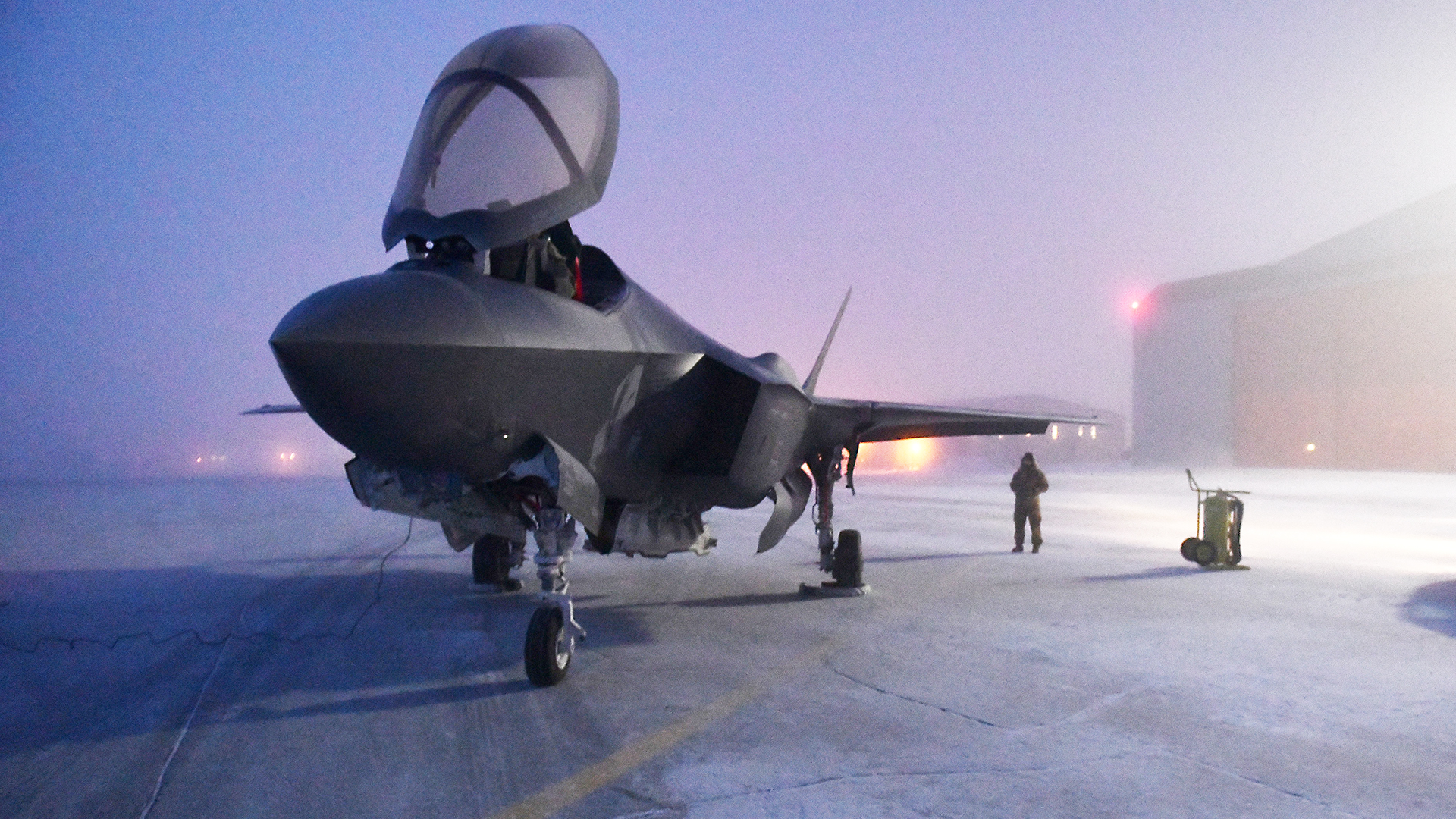
Scenario 2026: As a boost for the congressional elections in November, Trump occupies Greenland this summer. Because Russian submarines are swarming around the island, he claims, which in the future could puncture the president’s Golden Dome. Perhaps a dream like President Reagan’s Star Wars , but perfect as fuel to win an election. On Fox News you can see the F-35 flying around the island from the US base Thule.
Early on August 10, American soldiers pour out of planes that have landed at the airports in Nuuk , Kangerlussuaq in the north and Narsarsuaq in the far south. Resistance from the few Danish soldiers is futile. Members of Greenland’s government and administration are placed under house arrest.
Free passage for US military bases
That same evening, Trump reads a decree on TV, now American sovereignty applies to the island. He refers to the 1951 agreement giving the US the right to establish and use defense areas in Greenland. However, without mentioning in cooperation with NATO. Nor does he mention that the 2004 update (Igaliku Agreement) includes Greenland’s autonomy.
https://youtube.com/watch?v=twFuk8QQcTU%3Ffeature%3Doembed
Trump forgets that base construction requires Danish/Greenlandic consent. Or in any case, inform, it depends on the interpretation of the agreement text ”allows Washington to increase troop deployments on the island as long as authorities in Denmark and Greenland are informed in advance ”. But the argument ”owning Greenland” politically does not hold.
As Trump expands his executive powers, he is rushing to get congressional approval before the November election.
Is the NATO contract a lame duck?
Denmark refuses to approve the intrusion and refers the matter to NATO ’s North Atlantic Council (NAC ) under Article 4, which is activated when the territorial integrity of a member state is threatened. “The Parties will consult together whenever, in the opinion of any of them, the territorial integrity, political independence or security of any of the Parties is threatened.” This involves consultations, which is not meaningful under the Trump administration. NAC decisions on consultation require unanimity (consensus), which is torpedoed by the US veto.
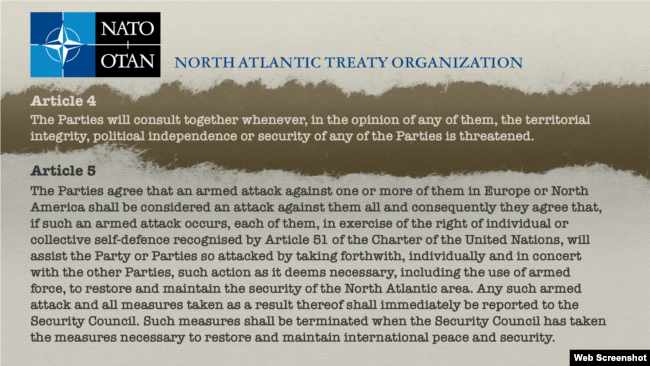
That leaves Article 5 of the NATO Treaty. An “armed attack” against an ally is considered an attack against all members. Military or otherwise. Each member decides for itself on “measures it considers necessary”, including non-military options such as sanctions or equipment. First, the NATO Council must make decisions by consensus. Theoretically, Luxembourg and Malta could veto it, or more likely, Hungary and Turkey.
Nordic Defense Alliance?
Cracking NATO is Denmark’s straw man bilateral or even better multilateral agreements on mutual military assistance. If the US can no longer be trusted. Although the EU’s military muscles are too weak, especially south of the Alps.
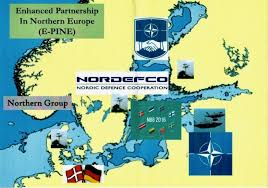
NORDEFCO (Nordic Defence Cooperation) is a cooperation to strengthen the defence capability between Denmark, Finland, Iceland, Norway and Sweden. However, it is not currently a binding military alliance with mutual defence guarantees. Focused on operational planning, capacity development and NATO complementarity.

A Nordic Defence Alliance based on Nordefco, perhaps expanded to include the Baltics and Poland, could be developed operationally as a mini-NATO within NATO. Preferably inspired by the Nordic Defence Alliance , a plan that collapsed with Norway/Denmark’s entry into NATO in 1948.
Such inter-Nordic defense cooperation can be expanded to joint defense plans for the Arctic and the Baltic Sea. With integrated naval and air defense zones from the Arctic to Greenland. Also with joint cyber defense. In addition, a task force for hybrid warfare and surprise attacks from great powers.
The Nordics a nightmare for military logistics
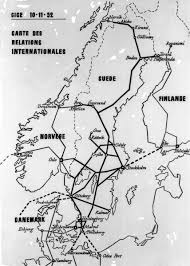
Russia has, in roundabout ways, five times as many aircraft and combat vehicles as the Nordic countries. 10-15 times more guns, more ammunition and drones. Let alone that our pangpang is more effective, but too little of everything. The worst problem is the Nordic countries’ lack of infantry, which is only enough for 16 brigades in 2030. Russia has just over 200.
The Nordic countries stretch like three long sausages on either side of the Baltic Sea. It is about a hundred miles from Trelleborg to Kiruna. The same applies to Norway as to Northern Finland to Lithuania. A nightmare for military logistics.
Kalmar Union?
Where could Russia possibly attack? The North Sea to get the boats out of Murmansk? Or across the north with four of the capitals. Maybe in the south, with the Danish Straits and then with Germans and Poles to protect the Baltics.
- The North Calotte (northern Norway–Finland–northern Sweden) represents the most likely military-strategic contact zone with Russia. A joint Finnish-Norwegian or Swedish-Norwegian division here would monitor NATO’s northern flank, protect naval and air bases, and secure the routes to Murmansk. Includes the North Atlantic with Iceland and Greenland.
- The Mid-Nordic region , with the Helsinki/Tallinn–Stockholm–Oslo axis, would be the logistical and political backbone for coordination, rapid movement and joint command functions. It could also form the core of a future Nordic headquarters.
- The Öresund region (Southern Sweden–Denmark) is the most economically and population-wise strategic part of the Nordic region. Here, a Swedish-Danish brigade could protect critical infrastructure, shipping through the Belts and possible NATO reinforcements via Denmark. And vice versa via Poland, provide protection for the Baltics.
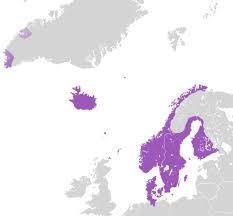
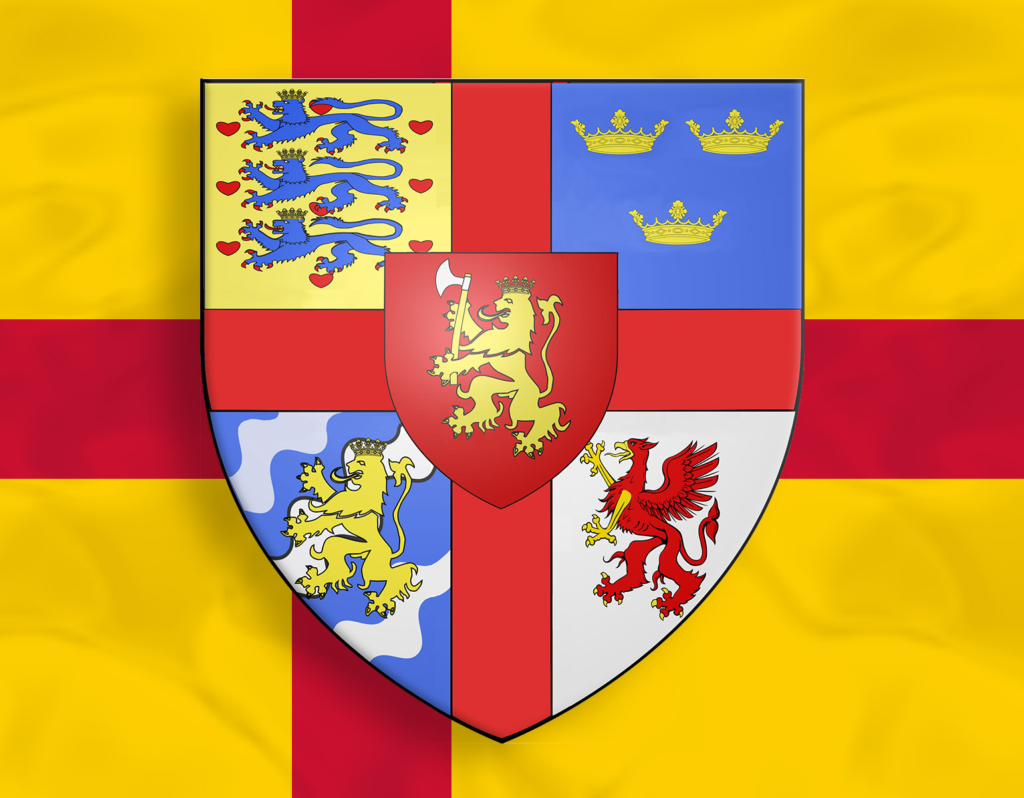
In short, a new Kalmar Union, like the Hanseatic League was a threat in the Middle Ages. Together, these three regions would form a defense system with optimized logistics for troops and equipment. Operationally as a kind of Nordic internal mobility within the framework of NATO.
Benefits
- Geographic proximity and rapid response: The brigades would be spread out as far apart as possible for joint exercise, movement and support within 24–48 hours.
- Complement to NATO: A regional command network would act faster than the slow decision-making processes in Brussels.
- Integrated logistics and materiel: The Nordic countries already use common platforms (Leopard 2, F-35, Gripen), which facilitates interoperability.
- Cultural and political affinity is important for the will to defend. Similar social structures, defense doctrines, and trust between countries make cooperation practically possible in a way that few other multinational alliances can achieve.
Difficulties
- Lack of ground forces: Despite the geographical advantage, the number of brigades is still low. The four countries combined would not be able to withstand a full-scale strong ground attack without support from larger NATO forces. If the US fails, it will mainly be from the UK, since Central Europe must have the highest combat readiness on its own front.
- Decision-making mandate and sovereignty: Joint governance requires a clear decision-making order – who leads if Swedish, Danish and Finnish soldiers are under the same banner? The risk is that bureaucracy and national reservations inhibit the speed of reaction.
- The nuclear umbrella: Without its own deterrent capability (which would be politically controversial), the alliance must rely on the US, UK and France – which undermines the idea of an independent Nordic defence force.
- NATO internal balance: Too strong a ”Nordic bloc formation” could create unrest within NATO’s structure, something that Jens Stoltenberg has previously warned against.
/ By Ingemar Lindmark