


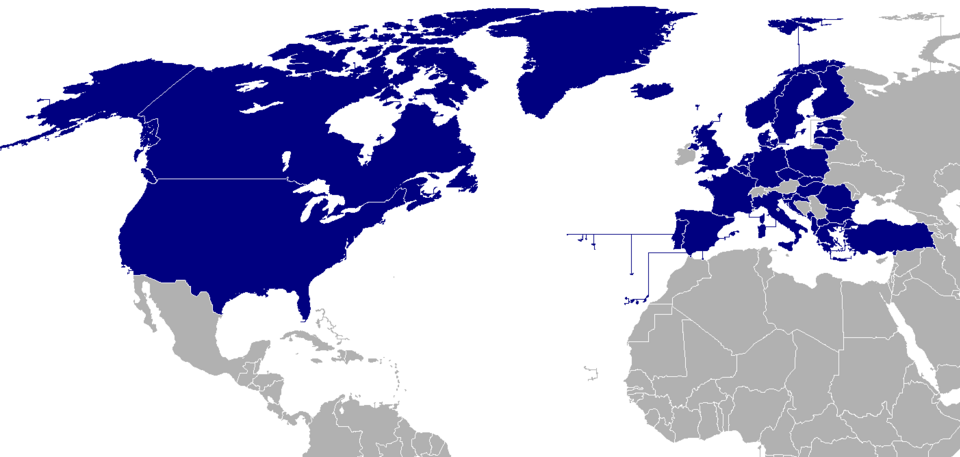
The US leaving NATO currently appears politically and strategically possible, but still unlikely; much speaks in favor of a sharply scaled-down commitment, but both military and power-political costs make a full-scale withdrawal highly risky for Washington. What speaks for/against an American withdrawal, based on the current Greenland conflict.
What speaks in favor of an exit or a sharp downsizing?
- Trump has explicitly said that the US may reconsider its NATO commitment if the alliance does not support US strategic demands regarding Greenland, and has responded ”we’ll see” when asked if the US might leave NATO over this. His administration is thus tying NATO membership to the outcome of a specific territorial conflict with Denmark/Europe.
- Domestic political pressure and impatience are driving a rapid drawdown of engagement in Europe, without giving Europeans time to replace American personnel, resources, and capabilities. It fits into a broader nationalist agenda that paints NATO as a burden.
- Under established interpretations of US constitutional practice, the president can unilaterally terminate the NATO treaty under Article 13 (one year’s notice), without formal congressional approval. Furthermore, the courts are considered very reluctant to block such a decision, which makes the threat more politically credible.
- A recurring American complaint is that European allies are “freeriding” on US capabilities; this has been reinforced rhetorically by Trump and linked to demands for greater European commitments, including in the Arctic and Greenland. It creates a domestic political logic for downgrading NATO if Europe is perceived as recalcitrant.
- A US administration seeking to disengage from NATO could argue that bilateral and “coalitions of the willing” arrangements are sufficient, e.g. with the UK, Poland and selected Nordic/Allied partners, without a formal NATO umbrella. In such a scenario, the US would seek to retain core advantages (access to certain bases, GIUK control, Arctic presence) through separate agreements.If Greenland … the US will shrink NATO…? Scenario: a Nordic Noto under a slimmed down NATO umbrella.
What speaks against the US leaving NATO?
- The US would lose a lot by leaving NATO completely, not least strategically. Access to bases in Europe is central to US freedom of operation in the Middle East, Africa and parts of Eurasia; a withdrawal would significantly impair this room for maneuver.
- Today, the US sets the direction of NATO, leads key functions and dominates nuclear deterrence. A withdrawal would mean Washington voluntarily leaving a structure where it has disproportionate influence over European security, technology, standards and operational planning.
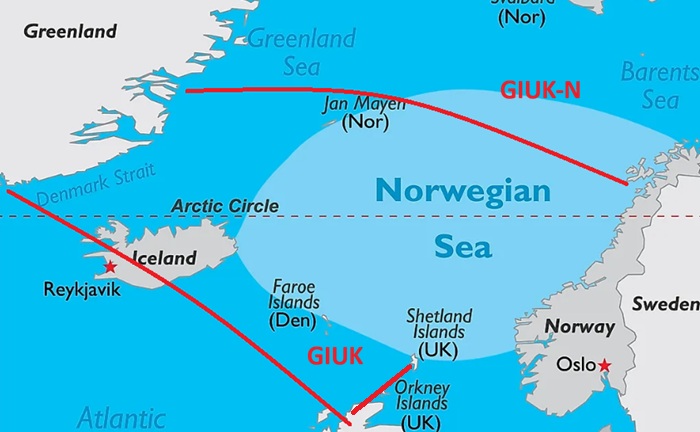
- The US describes Greenland itself as “vital” to national security and warns of a “large hole” in its defense architecture without territory. The NATO framework and cooperation with Denmark, Iceland, Norway and the UK make it easier to secure the GIUK gap and the Arctic; leaving NATO while still trying to maintain a maximum presence would be more expensive, politically more difficult and more unstable.
- The US accounts for a large part of NATO’s nuclear deterrent; if the country leaves, the alliance’s deterrent capability would be drastically undermined, which would also create concerns in Washington about the consequences (European nuclear proliferation, new bloc formations, greater Russian and Chinese foothold).
- An American withdrawal over a conflict over Greenland would likely trigger a deep crisis in the entire Western security order; several analysts believe that NATO as we know it might not survive. This would ultimately weaken the US global position more than the short-term “gain” of putting pressure on Denmark and the EU.
NATO’s dependence on the US – why it both strengthens and complicates
- NATO is currently heavily dependent on US military volumes, high-tech systems, intelligence, strategic transport tonnage, space and cyber capabilities, and nuclear weapons; these capabilities are difficult and time-consuming for Europe to replace. A swift US judgment would prevent European countries from building replacement capabilities, which would weaken NATO deterrence.
- The US role as the “guide” in NATO means that many decisions and plans are based on the assumption that Washington is leading; without clear leadership from a country that is much larger than the others, it will be difficult to maintain political consensus on how to act. It is precisely this political consensus that is raised as “the hardest nut to crack” if the US reduces its commitment.
- The same dependence that makes an American withdrawal a severe blow to NATO also allows the US to exert maximum leverage without actually leaving; the threat of justice or selective support can force concessions on, for example, the Greenland issue, without having to pay the price of a formal withdrawal.
Assessment of probability: leave, downgrade or stay?
- Formal withdrawal: Legally fully possible through Article 13 and the president’s foreign policy powers, but the strategic, political and prestige costs mean that researchers still consider a complete withdrawal unlikely at this time.
- Dramatically scaled back engagement: Much more likely is a scenario in which the US radically reduces troop presence, exercises, and certain guarantees, uses vetoes or threats of vetoes in NATO, and in effect makes Europe more insecure without formally leaving. This is in line with the administration’s impatience and its willingness to use Greenland as leverage.
- Status quo with pressure: A third, perhaps most realistic, alternative in the short term is continued membership combined with tougher demands for European rearmament and Arctic concessions, with NATO used as an arena for negotiation over Greenland rather than a reason to leave.
Scenario 1: The US threatens but stays put
The US uses the threat of withdrawal as leverage to force Denmark and the EU to make concessions on Greenland (e.g. leasing the Pituffik base or access to raw materials). The Trump administration temporarily scales down exercises and troop presence, but maintains membership to secure GIUK control and European bases. Result: Increased European armament, tense relations but intact NATO structure.
Scenario 2: The US formally leaves and builds parallel alliances
The president activates Article 13 and leaves NATO after a year, citing the alliance as blocking Greenland ambitions. The US makes bilateral agreements with the UK, Poland and Nordic countries (Norway, Sweden) for Arctic and GIUK surveillance, plus “coalitions of the willing” for nuclear deterrence. Result: Divided Europe, weaker deterrence against Russia and the US with a more expensive, less effective presence.
Even more dangerous for the EU if far-right parties in Germany, France and the UK gain increased influence. In addition to Hungary, Turkey and several NATO countries.
Scenario 3: Nordic Defense Alliance under a NATO umbrella
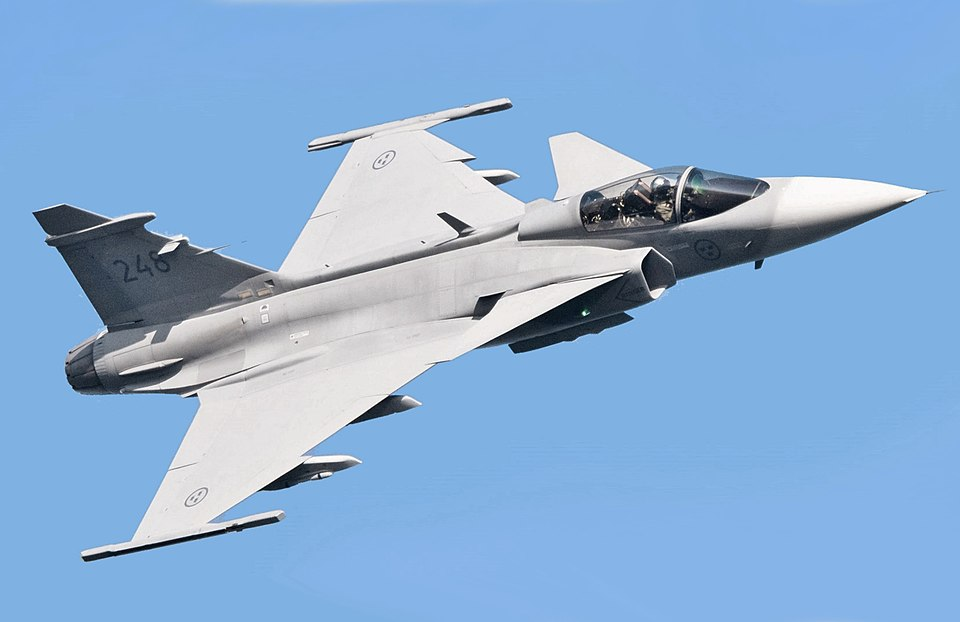
The USA (nuclear weapons and information superiority with satellites, among other things) is difficult to replace. The EU’s inability for collective defense allows the Nordic countries to sign bilateral defense agreements, which are included in a Nordic Defense Alliance. Which in turn is included under NATO, with the USA. The North Offensive Treaty Organization (NOTO) includes Finland, Sweden, Norway, Denmark (with Greenland), Iceland and the Baltics. Perhaps also Poland and Great Britain. With a GDP as large as Russia’s.
In peacetime, Noto is responsible for exercises, standardized weapons and expanded production of ammunition. In war, with coordinated defense under joint command. With the US’s nuclear weapons, missiles and information systems at its back, there is potential for effective defense, in effect in 5-10 years.
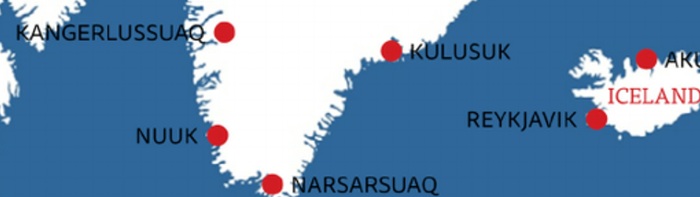
The US is expanding bases in northern Greenland for missile defense with Golden Dome. Matched with Noto’s bases in southern Greenland to ensure surveillance of the North Atlantic.
/ By Ingemar Lindmark